House for an Art Lover in Toronto by Picnic Design is a residential renovation that transforms a 1920s home into a bold, art-driven living space. Combining architecture and interior design, the project uses color, geometry and natural light to create a cohesive and expressive environment inspired by the homeowner’s extensive art collection.
Photo credit: Rémi Carreiro
Photo credit: Rémi Carreiro
The Idea
Inspired by the homeowner’s bold and extensive art collection, Picnic Design approached the project as an opportunity to create a home where art and architecture are deeply interconnected.
From the early planning stages, the collection served as a guiding principle – a “north star” shaping the entire design. The goal was to create a cohesive spatial experience by connecting different zones on the ground floor through unifying elements, while maintaining a sense of playfulness and referencing the intersecting geometries found in modern art.
Photo credit: Rémi Carreiro
Photo credit: Rémi Carreiro
The Space
Originally built in the 1920 the house included a rear extension that required substantial structural rebuilding. The renovation transforms the home into a visually bold yet functionally comfortable environment.
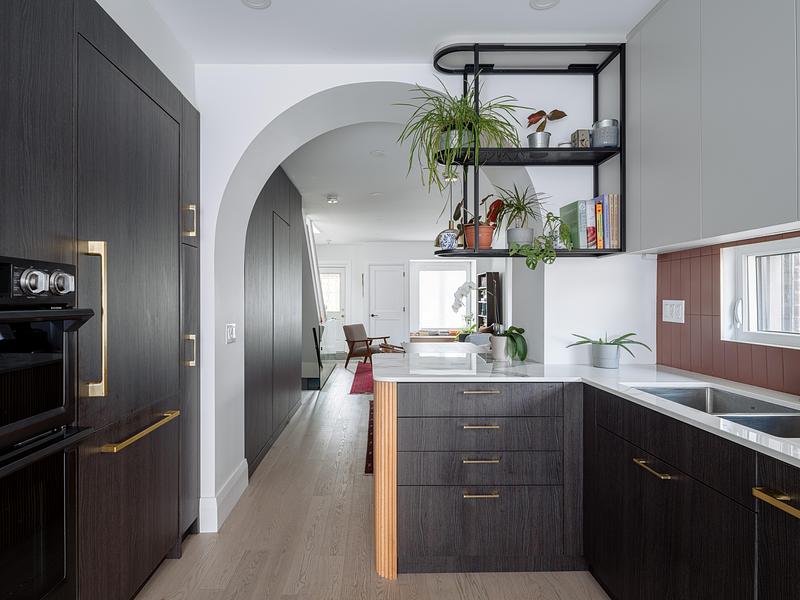
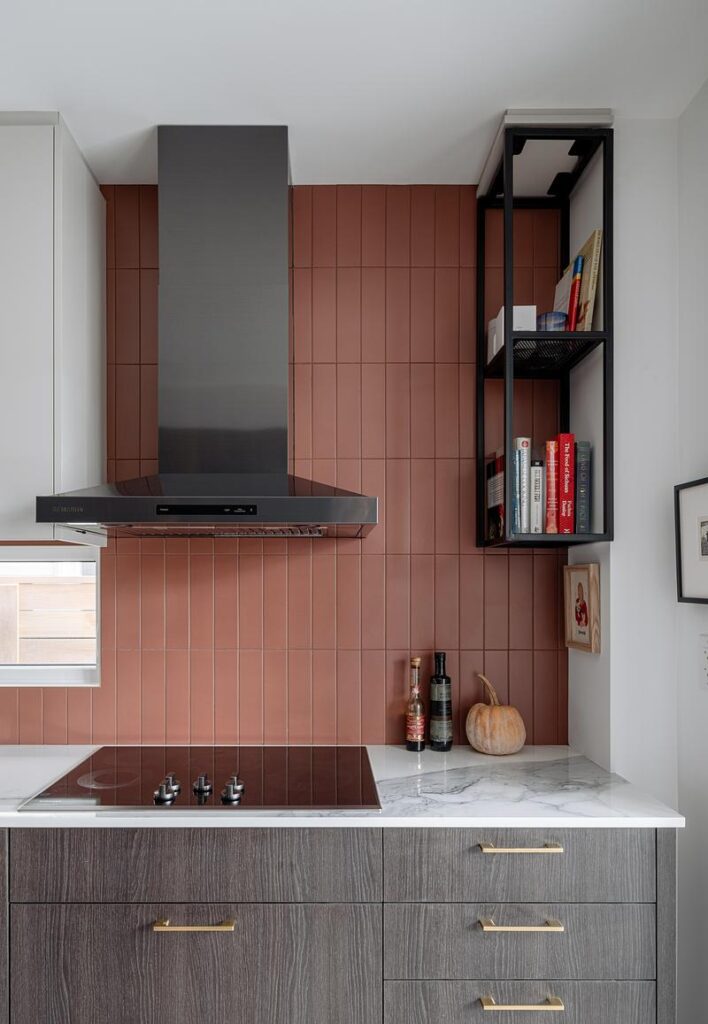
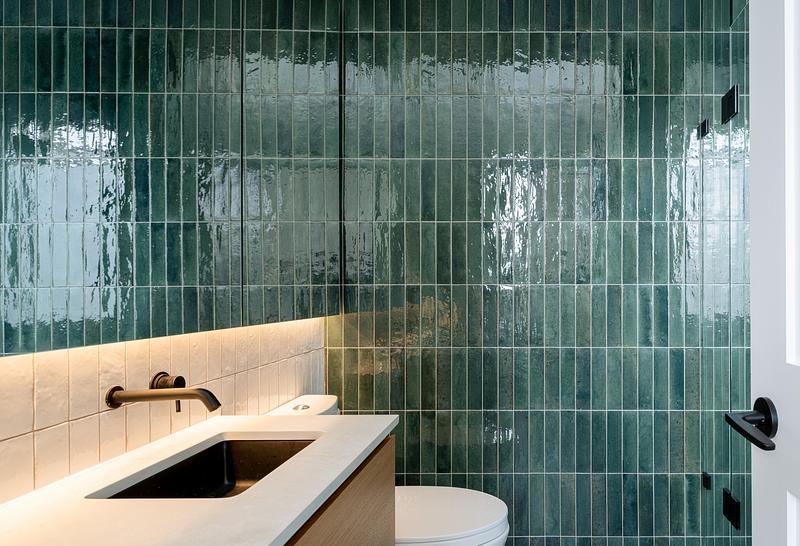
A sequence of transition zones introduces strong color blocks throughout the house — deep blue and teal tiles in the bathrooms and earthy terracotta in the kitchen. Subtle shifts in material and texture enrich the spatial experience.
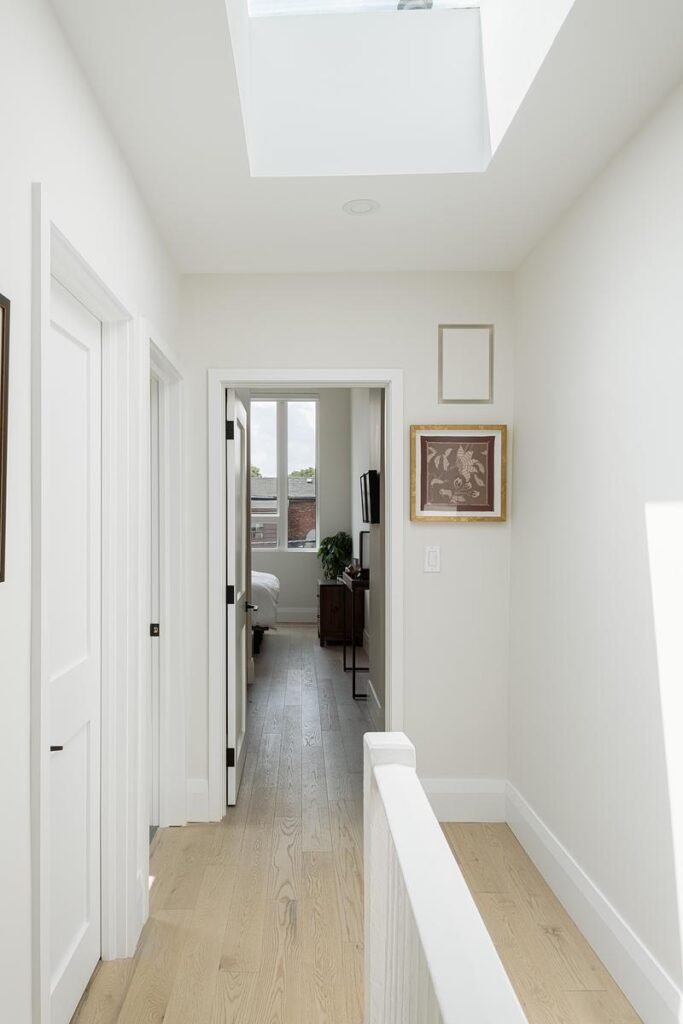
Framed views create visual continuity between different areas, while carefully maximized natural light — including a new skylight in the second-floor hallway — brings openness and airiness to what was once a confined interior.
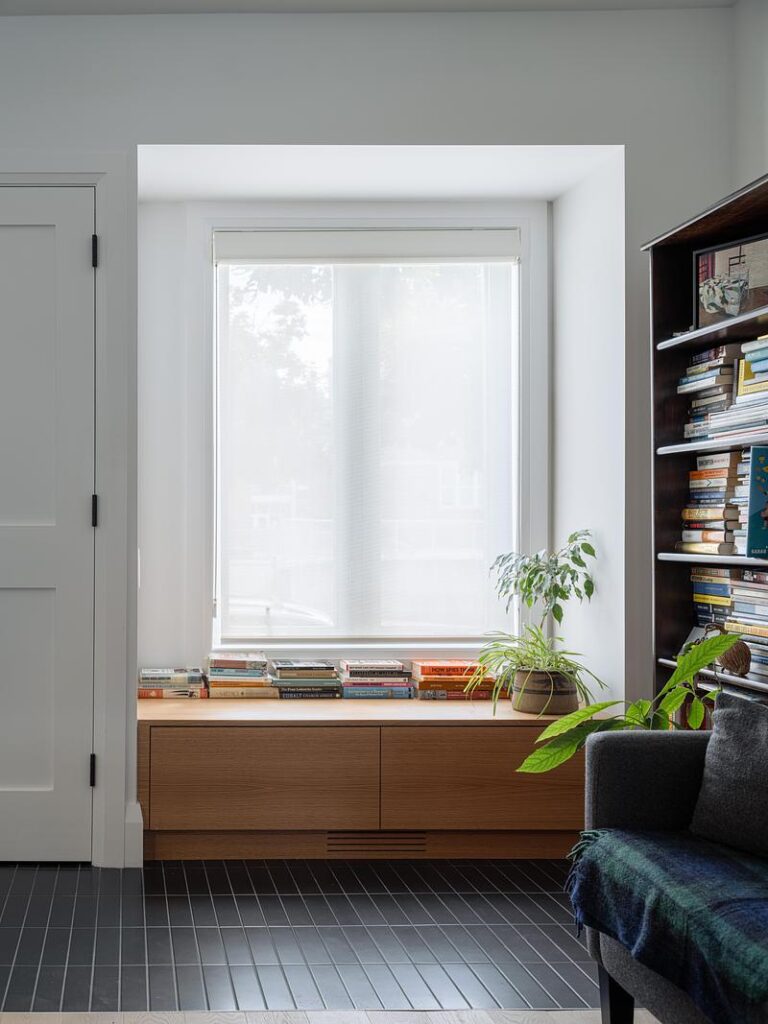
The entrance was expanded into a five-foot-deep vestibule spanning the width of the house. Defined by dark-toned floor tiles, this area incorporates a large window bench with integrated storage, which also acts as a focal point connecting the living and dining spaces. Wide-plank white oak flooring introduces a strong contrast as the space transitions from dark to light
Photo credit: Rémi Carreiro
The Design Element
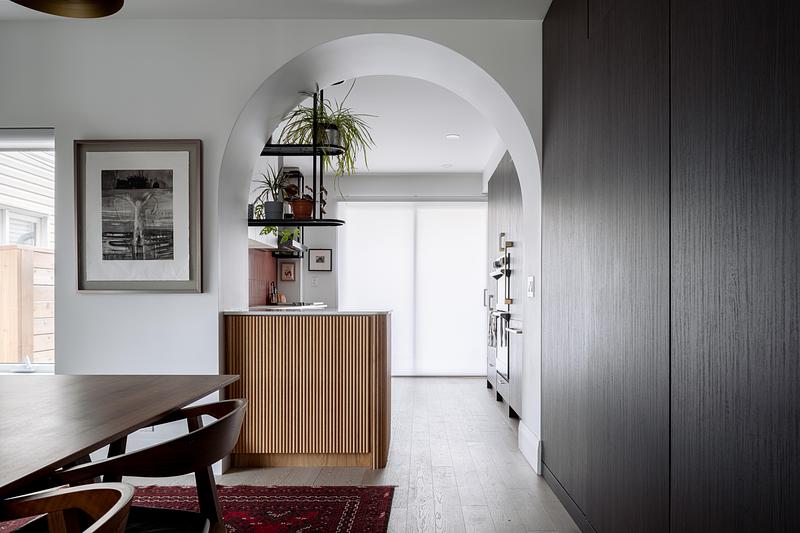
A central feature of the project is a continuous wall element known as the “Black Strip.”
Made from thermo-fused woodgrain laminate, it acts as both a functional and visual spine connecting the living room, kitchen, and rear extension.
Near the entrance, the strip conceals a powder room with hidden detailing. Moving toward the kitchen, it seamlessly integrates cabinetry, including tall storage units, a built-in refrigerator and a wall oven.
The strip ends at a white oak bench adjacent to glazed doors leading to the backyard. A perforated black metal shelving unit appears beyond the arched kitchen entrance, mirrored by a peninsula that extends into the living space. The peninsula is topped with a bright porcelain slab, while its base is wrapped in white oak tambour, adding a strong graphic texture.
The Lower & Upper Levels
Photo credit: Rémi Carreiro
The basement, previously unfinished, was raised by eighteen inches and now includes a guest bedroom, bathroom, laundry, storage and a recreation room. The entire level is equipped with energy-efficient hydronic underfloor heating.
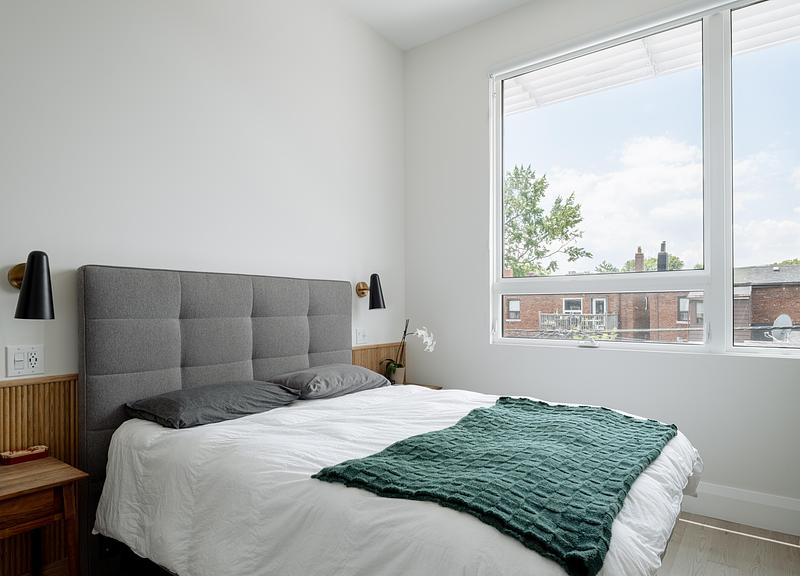
Above the rebuilt rear addition, a new upper level introduces additional natural light. The master bedroom features ten-foot ceilings and a Zen-inspired ensuite.
A brise-soleil with angled louvers shades the west-facing window, reducing heat gain in summer while allowing passive solar warmth during winter. The façade is clad in Norwegian fluted vertical siding made from recycled Brazilian Ipe wood, giving the extension a contemporary and textured appearance.
Photo credit: Rémi Carreiro
Outdoor Space
Photo credit: Rémi Carreiro
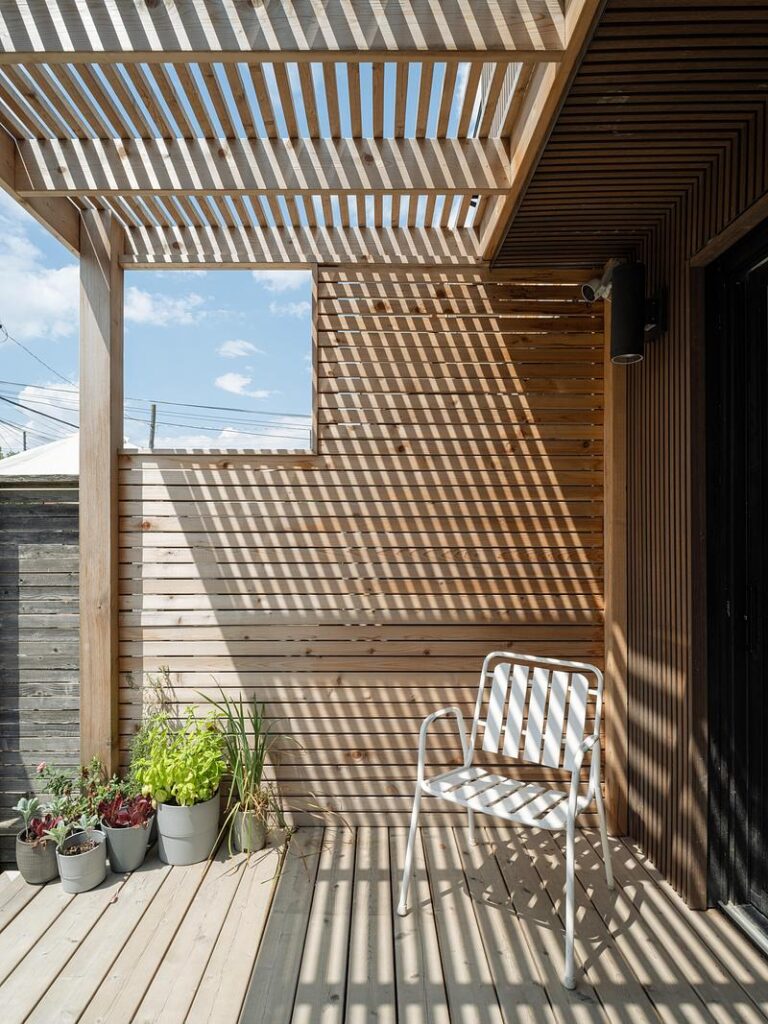
The backyard, once overgrown, has been transformed into an inviting outdoor area featuring a cedar deck and trellis for shaded gatherings.
A lightweight Douglas fir post-and-beam carport defines the parking area, while a pergola roof allows soft evening light into the home while offering partial shelter.
The Story
Through the renovation, color, geometry and bold design gestures become the defining language of the house. The project creates a cohesive environment where the homeowner’s art collection integrates naturally into daily life.
The result is a home that functions not only as a living space, but as a piece of inhabitable art.
About Picnic Design
Everything created by Picnic Design begins with a story. The studio works across architecture, interior design and installations, constantly moving between scales while considering both the surrounding environment and interior experience.
Their approach connects the narrative of the users with the qualities of the site, introducing unexpected design moments — from visual connections to hidden passages — and creating spaces designed to evolve over time.
Project Overview
Project: House for an Art Lover Type: Residential Architecture & Interior Design Location: Toronto, Canada Architecture & Interior Design: Picnic Design